


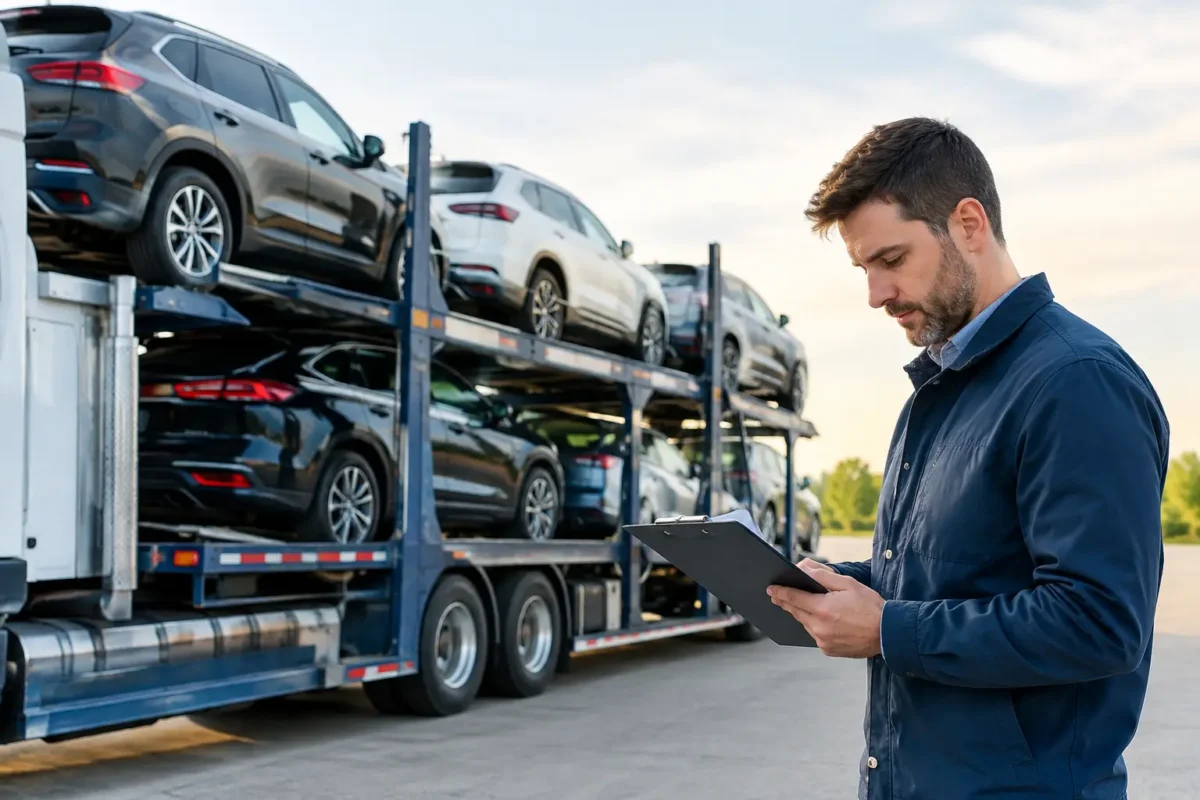
A vehicle can travel hundreds or thousands of miles without an issue, but customers still deserve a clear answer to one question before handing over the keys: what happens if damage occurs? Auto transport insurance is designed to address that concern, but the protection is not a blank check for every condition found at delivery. Knowing what is covered, what must be documented, and what to do at pickup helps you ship with far more confidence.
For most domestic vehicle shipments, the carrier moving your vehicle carries cargo insurance that applies while the vehicle is in that carrier’s custody. A transportation logistics coordinator helps arrange the shipment, match it with an appropriate qualified driver, and keep communication moving from scheduling through delivery. The carrier’s policy is generally the coverage that applies to transit-related damage, which is why carrier verification and inspection paperwork matter.
What Auto Transport Insurance Usually Covers
Carrier cargo coverage is intended to protect against direct physical damage that happens during transport. That can include damage caused by a traffic accident, a loading or unloading incident, or contact with equipment on the trailer. For example, if a properly secured vehicle is damaged when a carrier is involved in a roadway accident, the carrier’s cargo policy may respond to the claim.
Coverage limits and terms vary by carrier, vehicle type, trailer type, and route. A standard sedan moving on an open carrier is not evaluated the same way as a high-value exotic vehicle in enclosed transport or a piece of heavy equipment requiring specialized loading. The carrier’s policy must be appropriate for the shipment it accepts.
This is also why the lowest quote is not always the best value. A shipment needs a carrier equipped for the vehicle and route, with active authority and suitable insurance. A fair rate, a realistic pickup window, and clear communication are more useful than a bargain price that leaves critical questions unanswered.
What Carrier Coverage May Not Include
Auto transport insurance generally does not cover every issue that may arise around a shipment. Normal road dust, minor grime from open transport, mechanical failure, and problems caused by a vehicle’s pre-existing condition are usually outside the scope of cargo coverage. Damage caused by loose or improperly installed parts may also be excluded.
Personal belongings deserve special attention. Most carriers do not insure household goods, electronics, tools, or other personal items left inside the vehicle. In many cases, carriers also limit the amount of personal property that may be placed in a vehicle, if they permit any at all. Extra weight can create safety and regulatory problems, and unsecured items can shift or cause interior damage.
Weather is another area where expectations matter. Open carriers expose vehicles to the same normal road conditions experienced by any vehicle traveling on public highways. Rain, dust, and road debris are part of open transport, although actual physical damage caused by an identifiable transport incident should be documented and reported. Customers who need added protection from weather and road exposure may prefer enclosed transport, particularly for collector, luxury, or freshly restored vehicles.
Mechanical issues are not the same as transport damage. A vehicle that does not start at delivery, develops a battery problem, or reveals an existing fluid leak may require a mechanical evaluation. If a customer believes the issue resulted from carrier handling, the condition should be noted before the driver leaves so it can be reviewed properly.
The Bill of Lading Is Your Best Protection
The bill of lading, often called the BOL, is the most important document in the inspection process. It records the vehicle’s condition at pickup and again at delivery. The driver typically notes existing scratches, dents, chips, and other visible conditions on a vehicle diagram or inspection report.
At pickup, take a few minutes to walk around the vehicle with the driver. Do not rely only on memory or an older photo from your phone. Take clear, time-stamped photos and videos of all sides, the roof, wheels, windshield, mirrors, interior, and any existing damage. Photograph the odometer as well, especially if mileage matters to you.
Be specific if the vehicle has low ground clearance, aftermarket accessories, a loose bumper, inoperable features, or special starting instructions. These details help the carrier plan safe loading and prevent misunderstandings later. A vehicle that is inoperable can still be shipped, but it may require special equipment and should be disclosed when requesting a quote.
At delivery, inspect the vehicle before signing the final paperwork. Check it in good lighting whenever possible, and remove snow, heavy dust, or rainwater if it prevents a meaningful inspection. Compare the vehicle with the pickup inspection and your photos. This is not about assuming there will be a problem. It is about giving both the customer and the carrier an accurate record.
If you see new damage, note it clearly on the delivery bill of lading before signing. Take close-up and wide-angle photos, then notify the coordinator promptly. Signing paperwork with no damage noted can make a later claim harder to evaluate. If someone else accepts delivery for you, make sure that person understands they must inspect the vehicle and document any concerns before the driver departs.
How to Prepare Before Pickup
A little preparation protects the vehicle and makes the insurance process more straightforward if a concern ever needs review. Before the carrier arrives, remove personal belongings, toll tags, and loose accessories. Retract or remove antennas when possible, fold in mirrors if appropriate, and make sure the fuel level is low enough for safe loading – usually around a quarter tank is sufficient.
Customers should also confirm that the vehicle is operable unless the shipment was booked as inoperable. Check tire pressure, battery charge, and fluid leaks. Disable alarms or provide clear instructions for turning them off. If the vehicle has an air suspension, custom modifications, a manual transmission, or special loading needs, tell the transport coordinator in advance.
Keep these records together during the shipment:
- The carrier and driver contact information
- Pickup and delivery copies of the bill of lading
- Photos and video taken before pickup and at delivery
- Your booking confirmation and any special handling instructions
- Written notes about any condition concern, including the date and location
These documents are useful even when everything goes exactly as planned. They give everyone involved a shared record and allow questions to be answered quickly.
When Personal Auto Insurance May Help
Your own auto policy may provide some protection while a vehicle is being transported, but that depends on the policy and the type of loss. Comprehensive coverage, for instance, may apply to certain non-collision losses. Some policies have exclusions or restrictions when the vehicle is being transported by a commercial carrier, and deductibles may still apply.
It is worth calling your insurance agent before shipment if you have a high-value vehicle, custom equipment, or concerns about a specific route. Ask whether your policy remains active during commercial transport, whether it can supplement a carrier claim, and how a claim could affect your deductible or record. For luxury, classic, or collector vehicles, confirm that your agreed-value or stated-value coverage is still appropriate away from home.
Do not assume that filing with your personal insurer is always necessary or always the first step. When damage is related to carrier handling, the documented claim is typically reviewed through the carrier’s cargo coverage. Your coordinator can help you understand the required documents and keep communication organized, but insurance decisions and claim outcomes are made by the responsible carrier and insurer.
Questions Worth Asking Before You Book
A professional transport arrangement should make room for practical questions. Ask whether the assigned carrier has active cargo insurance, whether your vehicle has any special loading requirements, and whether open or enclosed transport makes more sense for its value and condition. If you are shipping to Puerto Rico, Hawaii, Alaska, the Caribbean, or Central America, ask about port procedures and where responsibility changes during each leg of the shipment.
It also helps to ask how pickup and delivery inspections will be handled. Door-to-door service is convenient, but residential streets can have clearance, parking, or access limits for a large carrier. In those cases, the driver may arrange a nearby safe meeting location. That adjustment does not reduce the need for a thorough bill of lading inspection.
At Garcia’s Auto Transport and Logistics, careful coordination starts before a driver is dispatched. Matching the right carrier to the vehicle, route, and service requirements helps prevent avoidable problems, while responsive updates give customers a clear point of contact throughout the move.
The goal is not to expect damage. It is to make sure that, if an issue occurs, the vehicle’s condition and the next steps are clear. A few careful photos, an honest inspection, and the right carrier can turn insurance from a source of worry into a practical layer of protection.
