


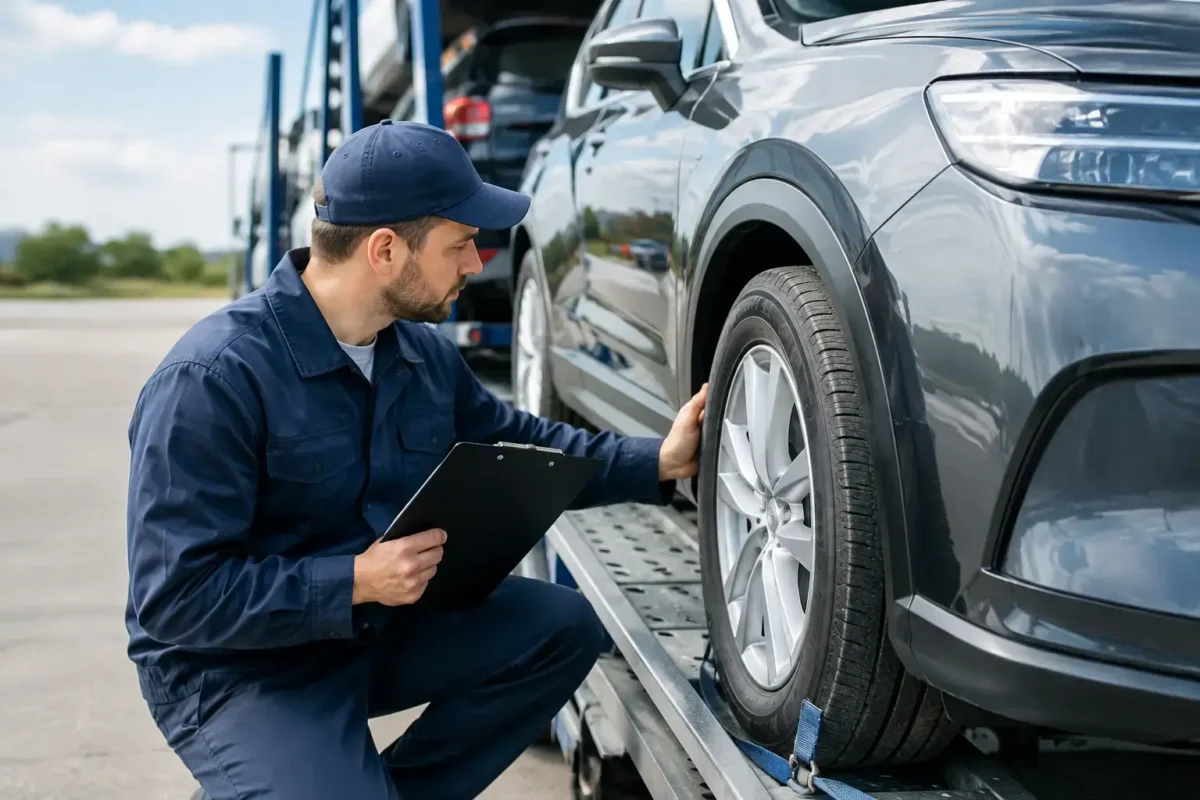
A vehicle can look perfectly fine from the driveway and still have a small scratch, windshield chip, or bumper scuff that matters when it arrives hundreds of miles away. So, do drivers inspect vehicles before transport? Yes. A condition inspection at pickup and delivery is a standard, essential part of professional auto transport.
This inspection creates a shared record of the vehicle’s visible condition before it is loaded and after it is delivered. It protects the customer, the carrier, and the driver by replacing guesswork with documentation. For anyone shipping a car across state lines, sending a vehicle to Puerto Rico or Hawaii, or moving dealership inventory, taking a few focused minutes during this process is one of the best ways to reduce stress.
Do Drivers Inspect Vehicles at Pickup?
Before loading, the driver typically walks around the vehicle and documents visible exterior condition on a Bill of Lading, sometimes called a vehicle condition report. This form generally notes existing scratches, dents, paint damage, cracked glass, missing parts, and other visible marks. The driver may use a diagram of the vehicle and written notes, while photos can provide an additional record.
The driver also confirms practical details needed for safe loading and transport. That can include whether the vehicle starts, rolls, brakes, steers, and has sufficient clearance. If a vehicle has aftermarket modifications, low ground clearance, inoperable status, or a known mechanical issue, it should be disclosed before pickup rather than discovered at the curb.
The exact depth of the inspection depends on the shipment. A standard open-carrier inspection is primarily a visible condition check, not a mechanical diagnosis or a full appraisal. Drivers do not remove panels, test every electronic feature, inspect the engine internally, or determine whether an old repair was properly completed. Their job is to accurately record what can reasonably be observed at pickup and safely secure the vehicle for transit.
Why the Bill of Lading matters
The Bill of Lading is more than a signature form. It is the baseline record used to compare the vehicle’s condition at delivery. You should receive or retain a copy after the pickup inspection, whether it is completed on paper or electronically.
Read it before signing. If the driver marks a scratch that you do not see, ask them to show you. If you notice a blemish that is not listed, request that it be added. A clear record does not mean anyone expects a problem. It simply gives every party the same starting point.
The Delivery Inspection Is Just as Important
At delivery, the driver and customer should inspect the vehicle again before the final paperwork is signed. Compare the vehicle with the pickup condition report, looking closely at the painted surfaces, bumpers, mirrors, glass, wheels, and roofline. Check the areas that can be easy to miss during a quick walk-around, including lower body panels and the front and rear corners.
Lighting and weather can affect what you see. If delivery occurs after dark, use a phone flashlight and take your time. If rain, snow, or road dust makes inspection difficult, document the vehicle with photos and communicate clearly with the driver about any area you cannot reasonably evaluate on the spot. A condition report is strongest when both parties can see the vehicle clearly.
If you find new damage that was not recorded at pickup, note it on the delivery Bill of Lading before signing. Take photos from wide angles and close range, including the affected area and the vehicle’s overall position. Ask the driver to acknowledge the notation, then keep all paperwork and photos together. Prompt, complete documentation helps the carrier and logistics coordinator review what happened fairly.
Do not sign a clean delivery receipt if you have identified a concern that needs to be recorded. At the same time, avoid assuming that every mark is transit damage before comparing it with the original inspection. Many small defects are already present but become more noticeable under different lighting or after a wash.
What Drivers Look for During a Vehicle Inspection
A driver is looking for visible, transport-relevant condition, not trying to judge a vehicle’s market value. The walkthrough usually focuses on exterior panels and components that could be affected during loading, unloading, or transit.
Common items documented include:
- Scratches, scuffs, paint chips, dents, and cracked trim
- Cracked or chipped windshields, windows, lights, and mirrors
- Loose parts, missing accessories, and existing body damage
- Tire and wheel condition that is visible during the walk-around
- Whether the vehicle is operable and can be safely loaded
For specialty shipments, the conversation may go further. A luxury car with a low front splitter, a classic vehicle with delicate trim, or a lifted truck with oversized tires may require a carrier and loading approach suited to its configuration. The more accurate the information at booking, the easier it is to match the shipment with the right equipment.
How to Prepare for a Better Inspection
You do not need to detail your vehicle before shipping, but a reasonably clean exterior makes the inspection more accurate. Heavy mud, snow, or dust can conceal existing scratches and make it harder to assess the vehicle at delivery. Washing it shortly before pickup, when practical, is a smart precaution.
Take your own date-stamped photos and a short walk-around video before the driver arrives. Capture all four sides, the hood, roof, trunk or tailgate, wheels, windshield, and any existing damage. Photos are especially useful for high-value vehicles, online purchases where the owner is not present, and long-distance moves where a friend or family member may accept delivery.
Remove personal belongings and loose accessories from the vehicle unless you have made separate arrangements for approved items. Secure or remove detachable spoilers, antennas, bike racks, and custom pieces when possible. Fold mirrors if appropriate for the vehicle, and let the coordinator know about alarms, special starting procedures, dead batteries, leaks, or changes in operability.
It also helps to arrange for an adult who understands the vehicle’s condition to be present at pickup and delivery. If you cannot attend, give your representative copies of your photos and clear instructions to review the paperwork before signing.
What Happens If You Cannot Be There?
Door-to-door transport is designed to be convenient, but schedules do not always line up perfectly. You may be at work, already moved to your new state, or managing a military relocation from another location. In that case, a trusted representative can meet the driver, provided they have authority to release or receive the vehicle and complete the condition report.
Tell your transport coordinator in advance who will be present and provide that person’s phone number. The representative should know where the keys are, whether the vehicle has any operating issues, and what existing damage is already documented. They should also understand that the delivery inspection needs attention before final acceptance.
At Garcia’s Auto Transport and Logistics, coordination begins before pickup so customers know what documentation and access arrangements their shipment requires. Clear communication is especially valuable for apartment complexes, gated communities, dealership lots, and locations where a large carrier may need to meet nearby rather than directly at the address.
Inspections, Insurance, and Realistic Expectations
An inspection supports a damage claim if a verified transit issue occurs, but it does not create coverage for pre-existing damage or mechanical problems unrelated to transport. This distinction matters. A driver can document that a vehicle does not start at pickup, but they are not responsible for diagnosing why it will not start at delivery if the condition is unrelated to shipping.
Customers should also understand that no inspection can eliminate every risk. Road conditions, weather, traffic, and the realities of loading vehicles onto multi-car carriers are part of transport. Qualified, insured and bonded drivers, appropriate equipment, and accurate condition reports are how reputable transport professionals manage those risks responsibly.
The goal is not to make the pickup and delivery process feel complicated. It is to make it clear. A careful inspection takes only a short time, and it gives you confidence that your vehicle’s condition was recognized from the moment it left your hands. When the driver arrives, keep your photos ready, walk the vehicle together, and give the paperwork the same attention you would give the keys.
