


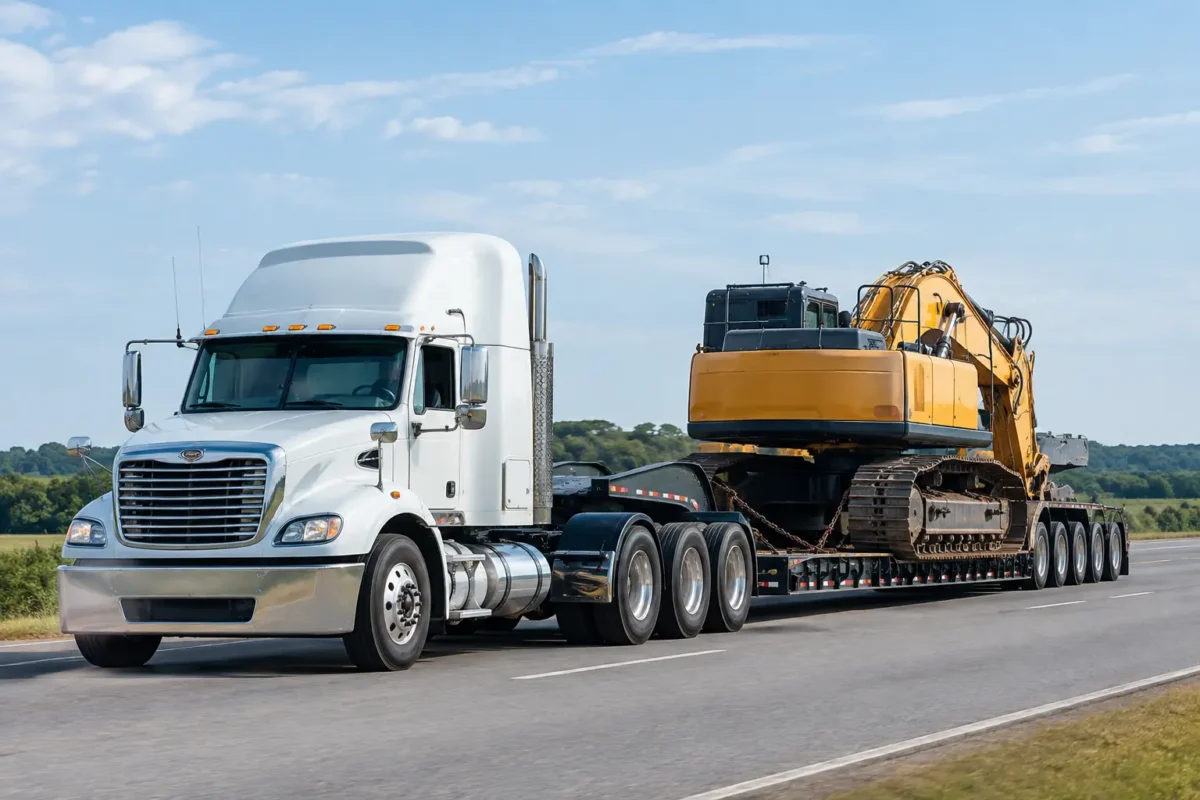
A bulldozer, excavator, articulated dump truck, or industrial generator cannot be treated like a standard vehicle shipment. This oversized equipment transport guide explains the planning details that protect your schedule, your equipment, and everyone sharing the road. The goal is not simply to find a truck. It is to match the machine, route, trailer, permits, and pickup conditions before the carrier arrives.
Start With Accurate Equipment Details
Oversize transport begins with measurements, not a quote. A few inches of height or width can change the trailer needed, the permits required, the available routes, and the final transport cost. Estimates are useful for early planning, but a logistics coordinator and carrier need verified dimensions to arrange a shipment correctly.
Provide the equipment’s year, make, model, serial number when available, operating weight, overall length, width, and height. Include attachments that will travel with the machine, such as buckets, forks, blades, booms, counterweights, ramps, or tires. If an attachment can be safely removed, doing so may reduce the shipment’s dimensions and make scheduling easier.
Also explain whether the equipment runs, rolls, steers, brakes, and can be loaded under its own power. A non-running excavator or forklift may need a winch, a heavier-capacity trailer, additional loading time, or support equipment at pickup and delivery. Sharing that information early avoids a driver arriving with a setup that cannot safely load the machine.
Choose the Trailer for the Load, Not the Lowest Number
Heavy equipment transport is specialized because equipment shapes and weight distribution vary widely. The right trailer is selected around the machine and route, not just the distance between pickup and delivery.
A standard flatbed may work for equipment that is within legal height and weight limits, but taller machinery often requires a step-deck or lowboy trailer. Removable gooseneck trailers are frequently used for large, drive-on construction equipment because they create a low loading angle and can handle substantial weight. Extendable trailers may be necessary for equipment with unusually long frames, booms, or components.
The lowest price is not always the best value if it assumes a trailer type that will not work at your locations. Ask whether the quote accounts for the machine’s loaded height, axle weight, loading method, and any attachments. A clear answer upfront is better than a last-minute equipment change, delay, or revised price.
Weight Distribution Matters
Total weight alone does not tell the full story. An excavator, for example, can place a significant amount of weight over specific trailer axles. Carriers must position the load correctly to comply with axle limits and maintain stable handling. This may affect how attachments are placed, whether a machine is driven forward or backward onto the trailer, and which trailer configuration is assigned.
Permits and Route Planning Are Part of the Shipment
An oversized load may require permits in every state it crosses. Requirements vary by state and can depend on width, height, length, gross weight, axle weight, and the roads used. Some loads also require escort vehicles, designated travel windows, route surveys, signs, flags, or warning lights.
This is where detailed planning has real value. A direct route on a map may include a low bridge, restricted roadway, sharp turn, construction zone, or local weight limit that prevents a loaded trailer from passing. The legal route may be longer, and that additional mileage or permit work can affect timing and cost.
Weather and seasonal restrictions matter as well. Frost laws, high-wind conditions, holiday travel limits, and regional construction can change when an oversized shipment is allowed to move. For time-sensitive projects, give the transport coordinator as much notice as possible. Permit processing and carrier availability are not always immediate, especially for wide, heavy, or unusually configured loads.
Prepare Pickup and Delivery Sites Before Scheduling
Door-to-door service is convenient when the sites can safely accommodate the equipment and trailer. A lowboy or multi-axle setup needs more turning room and firmer ground than a passenger-car carrier. Narrow gates, overhead wires, soft shoulders, parked vehicles, and tight residential streets can create avoidable loading problems.
Before booking, confirm that the driver can enter, turn, load, and exit safely. Measure gates and overhead clearances, identify a clear staging area, and make sure the ground can support both the machine and the loaded truck. If the pickup or delivery location is restricted, arrange a nearby equipment yard, truck stop, dealership lot, or other approved meeting point with adequate space.
A responsible party should be present at both ends whenever possible. They can provide site access, confirm the equipment condition, answer operational questions, and sign inspection paperwork. If no one can be present, establish the release process, keys, contact information, and site instructions in writing before dispatch.
Secure the Equipment and Its Loose Components
The carrier is responsible for proper load securement, but equipment owners and site teams play an important role in preparing the machine. Remove or secure loose tools, personal items, detachable accessories, and debris. Fold mirrors or antennas when appropriate, retract booms, lower buckets, and secure moving parts according to the manufacturer’s guidance.
Fuel levels should be discussed before pickup. Some equipment needs enough fuel for loading and unloading, while excess fuel adds unnecessary weight and may create safety concerns. Check for active leaks, damaged hydraulic lines, weak tires, or battery issues that could affect loading. Let the coordinator know about any condition that makes the equipment difficult to move.
Take dated photos from all sides before pickup, including close-ups of existing dents, scratches, broken lights, worn tracks, or other visible conditions. The driver will typically complete a pickup inspection or bill of lading. Review it carefully, because that document creates the baseline for the delivery inspection.
Understand Insurance, Timing, and Price Variables
Oversized equipment transport is affected by more variables than ordinary auto shipping. The size and weight of the equipment, mileage, route complexity, permit requirements, trailer type, loading conditions, season, and urgency all influence the rate. A shipment that needs specialized loading or escort support will naturally cost more than a legal-size machine that can travel on a standard flatbed.
Ask for a clear explanation of what the quoted price includes. Confirm whether permits, escorts, loading assistance, and extra attachments are included or handled separately. You should also understand the carrier’s cargo insurance and any coverage limits that apply to your particular equipment. If the declared value exceeds standard coverage, additional protection or documentation may be appropriate.
Transit windows should be realistic rather than overly precise. Once a driver is loaded and permitted, weather, traffic, inspections, road closures, and legal travel-hour restrictions can affect the schedule. Good communication does not mean promising that nothing will change. It means sharing updates early and working through changes with a practical plan.
Work With a Coordinator Who Asks the Right Questions
For a heavy equipment move, the booking process should feel thorough. A qualified logistics coordinator will ask about dimensions, weight, operability, attachments, site access, dates, route concerns, and special handling needs before matching the shipment with a carrier. That attention protects both the customer and the driver.
Garcia’s Auto Transport and Logistics coordinates equipment shipments by helping customers prepare the details, select an appropriate carrier, and stay informed from pickup through delivery. The most useful conversation is an honest one: explain the machine exactly as it will travel and flag any site or scheduling challenge early.
When delivery day arrives, inspect the equipment before signing final paperwork. Compare its condition against your pickup photos and the original inspection report. If you notice a concern, document it clearly while the driver is present and follow the established claims process promptly.
A well-planned equipment shipment gives your crew one less problem to solve. Provide accurate information, leave room for permit and route realities, and choose coordination that keeps you informed instead of guessing where your machinery is.
